

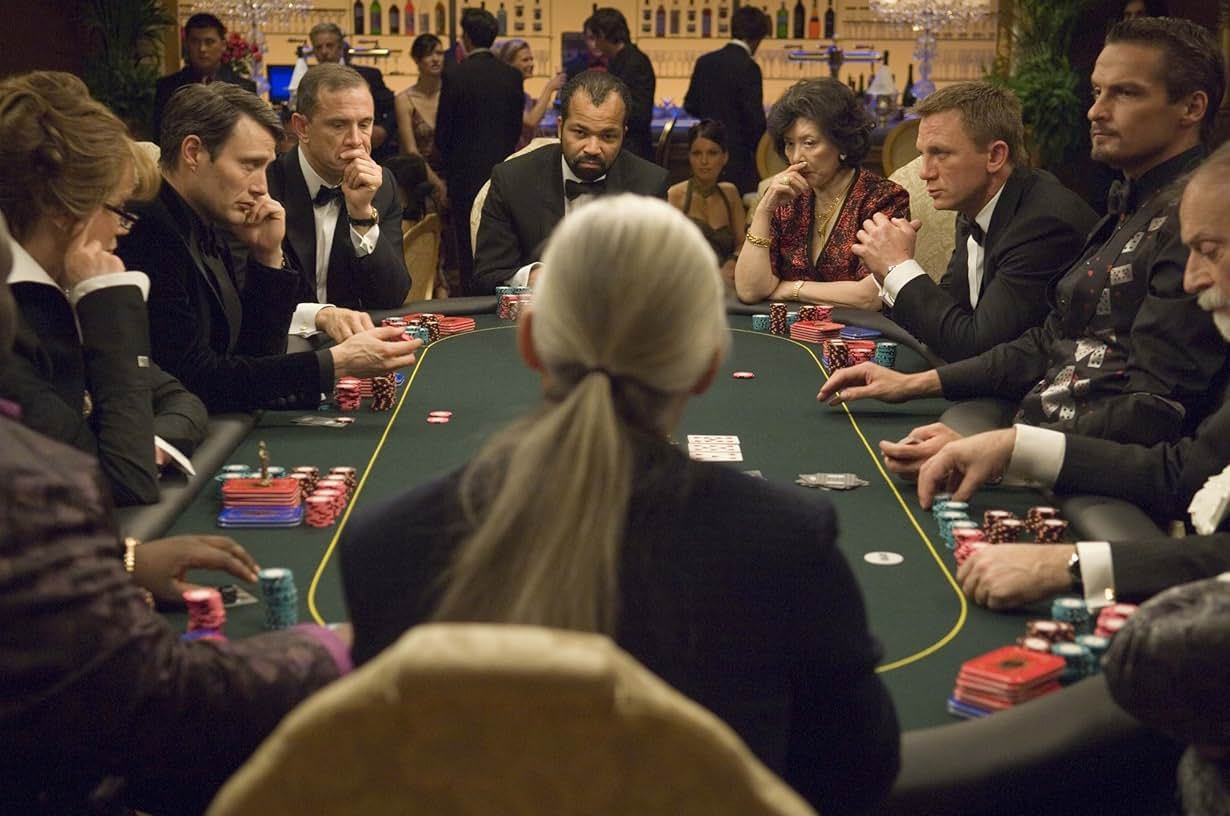
Pop culture has spent decades cultivating a highly stylized, dramatic image of the casino card counter. In major cinematic releases, television dramas, and mainstream fiction, the card counter is almost always portrayed as an eccentric genius, a mathematical savant, or a rogue criminal mastermind. These characters walk onto a glamorous casino floor, effortlessly memorize hundreds of cards in a blur of visual graphics, and walk away with millions of dollars after a few hours of high-stakes play.
While these narratives make for gripping cinema, they bear almost no resemblance to the reality of professional blackjack. Hollywood has stripped away the actual mechanics of card counting, replacing a systematic grind of basic arithmetic and statistical variance with sensationalized fiction. To truly understand how blackjack works at a professional level, one must separate theater from reality and debunk the most pervasive myths surrounding this misunderstood discipline.
Myth 1: Card Counting Requires a Photographic Memory
The single most common trope in gambling cinema is the character who possesses a savant-level memory. The audience is shown a visual representation of the protagonist mentally tracking every single card that has left the physical shoe, remembering specific suits, values, and sequences over hours of continuous play.
The Reality of Simple Point Assignment
In practice, professional card counters do not memorize individual cards. Doing so would be humanly impossible over an eight-deck shoe containing 416 cards. Instead, card counting relies on a highly streamlined system of point addition and subtraction.
The most common system used by professionals is the Hi-Lo system. In this method, cards are grouped into three basic statistical categories, and each category is assigned a singular point value:
-
Low Cards (2 through 6): Assigned a value of plus one.
-
Neutral Cards (7 through 9): Assigned a value of zero.
-
High Cards (10, Jack, Queen, King, and Ace): Assigned a value of minus one.
Instead of remembering that the Queen of hearts and the four of clubs were dealt on the last hand, a card counter simply processes the net mathematical impact. If a dealer draws a ten and a five, the counter thinks minus one and plus one, resulting in a net change of zero. The entire process is a basic arithmetic loop that tracks whether the remaining unplayed cards are disproportionately rich in high cards or low cards.
Myth 2: Card Counting is Illegal
Cinematic portrayals frequently imply that card counting is a federal offense or an act of outright fraud. Characters are shown being cornered by security staff in dark rooms or arrested by local law enforcement agencies for using their brains to beat the house.
The Legal Framework of Mental Analysis
In the United States, as well as most international gambling jurisdictions, card counting is entirely legal. Court rulings have consistently established that using your intellect, memory, and basic mathematics to analyze publicly available information does not constitute cheating. Cheating requires the alteration of the physical components of the game, such as marking cards, using hidden digital devices, or colluding with a crooked dealer.
However, just because an action is legal does not mean casinos are forced to accept it. Casinos are private properties. In places like Las Vegas, operators retain the legal right to refuse service to anyone without providing a specific reason. If a casino identifies a player who is successfully exploiting the math of blackjack, management will politely ask them to stop playing blackjack, back them off from the table, or trespass them from the premises entirely.
Myth 3: Counters Win Every Hand and Become Instant Millionaires
Movie plots require rapid escalation. A character learns to count cards, risks a modest bankroll, and within a single weekend, amasses enough money to buy a luxury estate. Winning hands appear guaranteed, and losing streaks are glossed over in quick musical montages.
The Reality of Long-Term Marginal Edge
Card counting does not grant the player immediate dominance over the house. At its absolute peak, a perfect card counter operating in optimal conditions secures a statistical advantage over the casino of roughly one percent to two percent. This is a remarkably slim margin, identical to the natural advantage the casino holds over casual players in other table games.
Because the edge is so narrow, card counters are heavily exposed to short-term variance. A professional card counter can execute their strategy flawlessly for forty hours straight and still lose thousands of dollars due to a natural run of bad cards. Success is measured over tens of thousands of hands and hundreds of hours of play. It is a slow, methodical business model that resembles trading stocks far more than hitting a sudden lottery jackpot.
Myth 4: The Threat of Physical Backroom Violence
In older cinematic depictions of the gambling industry, characters caught counting cards are escorted to a subterranean backroom by menacing security personnel to face physical retaliation. This has created a persistent belief that card counting carries significant physical danger.
The Modern Corporate Casino Environment
The modern casino landscape is dominated by publicly traded corporations, massive entertainment conglomerates, and strict regulatory oversight. The era of shadowy, backroom enforcement vanished decades ago.
Today, if a player is suspected of card counting, the intervention is mundane and corporate. A floor supervisor or shift manager will approach the table, speak in a polite tone, and inform the player that their blackjack play is no longer welcome. They may offer to guide the player to a slot machine or a roulette table instead. Security staff are highly trained to avoid physical contact unless a patron becomes violent, as a single lawsuit would cost the corporate casino far more than a card counter could ever win.
Myth 5: Counters Always Blend in as High-Rolling Playboys
To maintain visual appeal, film directors cast card counters as glamorous high-rollers who command attention, order expensive drinks, and surrounded themselves with large crowds of onlookers at the highest-stakes tables in the room.
The Art of Total Longevity and Camouflage
The most successful real-world card counters look completely unmemorable. Longevity in the industry requires blending into the background so that surveillance staff and floor managers do not scrutinize your play.
A professional counter avoids erratic behavior and flashiness. They often dress like casual tourists, minor business travelers, or regular local retirees. They actively practice cover play, which means occasionally making intentional, statistically minor mistakes or betting adjustments to mimic the behavior of an emotional, superstitious gambler. The goal is to appear completely clueless to the trained eyes in the surveillance room.
Frequently Asked Questions
What does the term True Count mean and why is it calculated?
The running count is the raw mathematical total calculated by adding and subtracting points as cards are dealt. However, a running count of plus six means something vastly different if there is only one deck left to play versus six decks left in a large shoe. To normalize this data, a counter divides the running count by the estimated number of remaining unplayed decks. The resulting figure is the true count, which accurately tells the player their exact mathematical edge at that moment.
How do casinos use table limits to disrupt card counters?
Casinos impose strict minimum and maximum betting limits on every table to restrict a player’s ability to capitalize on a positive count. To make a profit, a card counter must wager small amounts when the count is neutral or negative, and rapidly increase their bet size when the true count rises. If a table has a narrow spread, such as a ten-dollar minimum and a one-hundred-dollar maximum, the counter cannot increase their stakes enough to offset the hands played during a negative count.
Can card counting strategies be used effectively in online casinos?
Card counting is virtually impossible in standard online video blackjack games because the software utilizes a digital Random Number Generator to completely shuffle the entire virtual deck after every single hand. Even in live dealer online games, operators combat card counting by instructing the human dealer to perform a manual shuffle long before reaching the midpoint of the shoe, destroying the deck penetration required for a counter to establish a reliable statistical edge.
What role do modern surveillance systems play in identifying counters?
Modern casino surveillance relies on sophisticated table-tracking software alongside experienced human analysts. This technology monitors a player’s exact betting patterns in relation to the moving count of the deck. If a computer system notices that a player consistently increases their wager size precisely when the count becomes favorable, and drops their stakes back to the minimum when the count crashes, a red flag is generated for the security team to review.
Why are automatic shuffling machines the ultimate defense against counting?
Continuous Shuffling Machines are devices that sit on the table and constantly cycle used cards back into the shoe after every round. Because the cards are continuously reintegrated and mixed, the composition of the remaining deck never changes from a statistical standpoint. The running count remains locked at zero permanently, completely neutralizing any form of card counting strategy.
What is a spotter and how do card counting teams operate?
A card counting team splits responsibilities among multiple members to avoid casino detection. A spotter sits at a table playing the minimum wager amount, quietly keeping track of the count without altering their bet size. When the count becomes highly favorable, the spotter uses a subtle signal to call over a big bettor teammate. The big bettor walks up to the table, places massive wagers while the deck is hot, and leaves as soon as the count drops, keeping their betting spikes completely disconnected from individual tracking.

Comments are closed.